Wednesday, March 18, 2026
NinjaOne: Unlocking Brand-Performance Growth at 30%+ Lower Incremental CPA
About NinjaOne
NinjaOne unifies IT to simplify work for 35,000+ customers in 140+ countries by delivering endpoint management, autonomous patching, backup, and remote access in one platform. In January 2026, the company announced it surpassed $500M in annual recurring revenue.
Executive Summary
NinjaOne is expanding into top-of-funnel channels like YouTube and CTV to unlock new growth. But traditional attribution (UTM/cookies) greatly under-counted these channels, making it hard to scale them with confidence.
Maxma deployed always-on incrementality measurement—without relying on cookies or UTM tracking—across 10+ channels in under a month and continued measuring new channels and tactics as the team added them. This gave the team clear guidance on what to scale, hold, or pull back based on the latest performance as budgets, tactics, and creative evolved.
As a result, NinjaOne scaled into 5+ top-of-funnel channels, driving substantial inbound growth at 30%+ lower incremental cost per inbound lead than their original performance channels in under six months—unlocking a new "brand-performance" growth engine with far more runway to scale than saturated search.
The Challenge
NinjaOne wants to expand "brand" investment—cover top-of-funnel channels like YouTube/CTV and broader targeting tactics across paid social—to accelerate growth as bottom-of-funnel channels become more saturated. But early tests looked "quiet" in UTM/cookie attribution because much of the impact is view-through, cross-device, and delayed—so it was unclear whether the channel wasn't working or simply wasn't being measured.
The team is performance-driven: impressions aren't the goal. They need these channels to prove incremental inbound leads at an efficient cost—so they can scale with confidence.
The Maxma Solution
Data Onboarding
Using one-click ad platform connections plus a database integration, Maxma onboarded NinjaOne's data across 10+ channels as well as first-party KPI data in under two weeks.
1-Year Retrospective Insights Guiding Initial Optimization
Within the first month, we delivered a full-year performance readout across search, paid social, B2B inbound, brand channels, and SEO—with tactic-level breakouts and week-by-week trends detailed enough to pinpoint what was driving results (and what wasn't), enabling targeted optimizations.
Ongoing Monitoring + Budget Guidance
As the team expanded brand investment and added new channels and tactics, Maxma kept measurement up to date and used response curves to guide budget decisions—showing where to scale, hold, or pull back as saturation and efficiency shifted.
The Outcome
What We Found
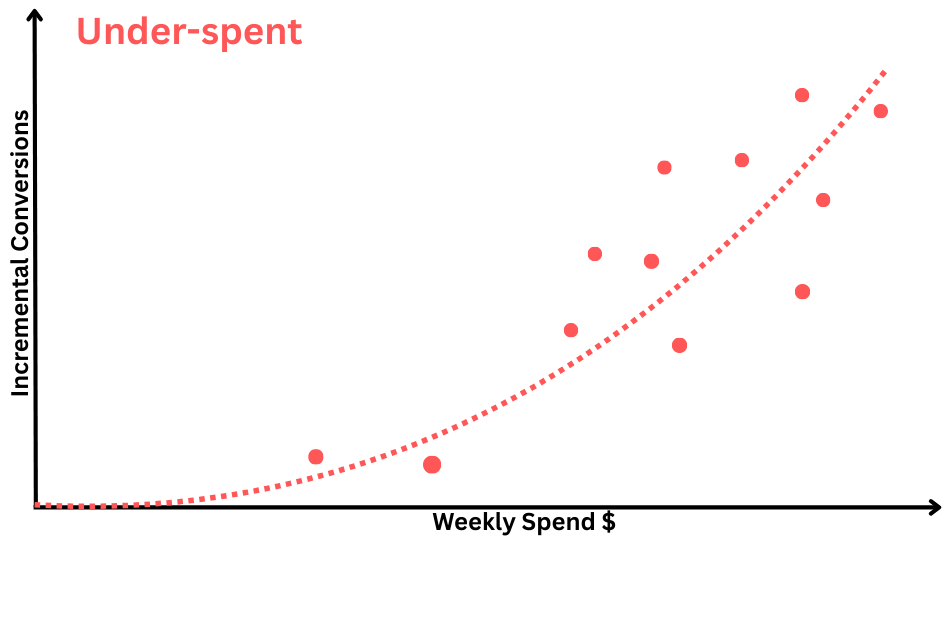
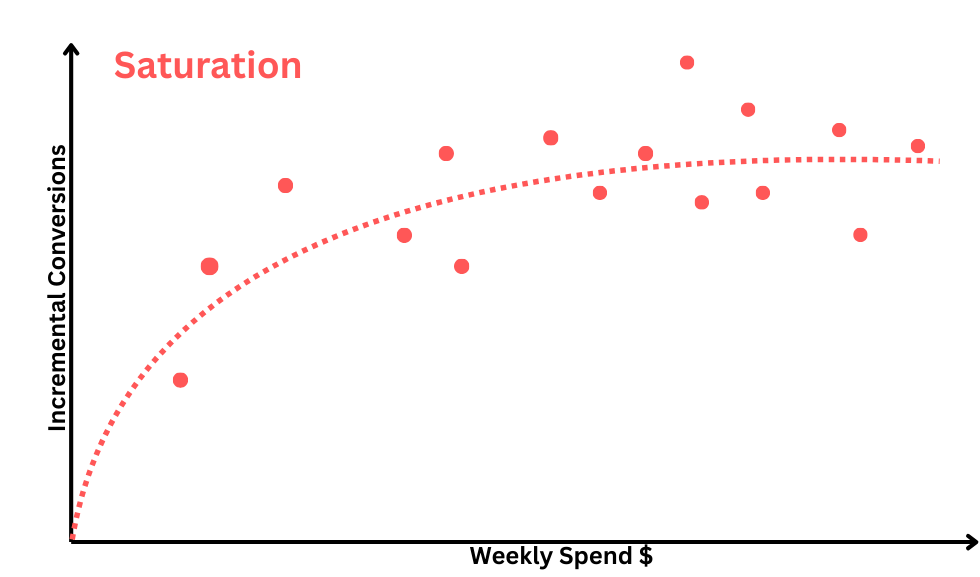
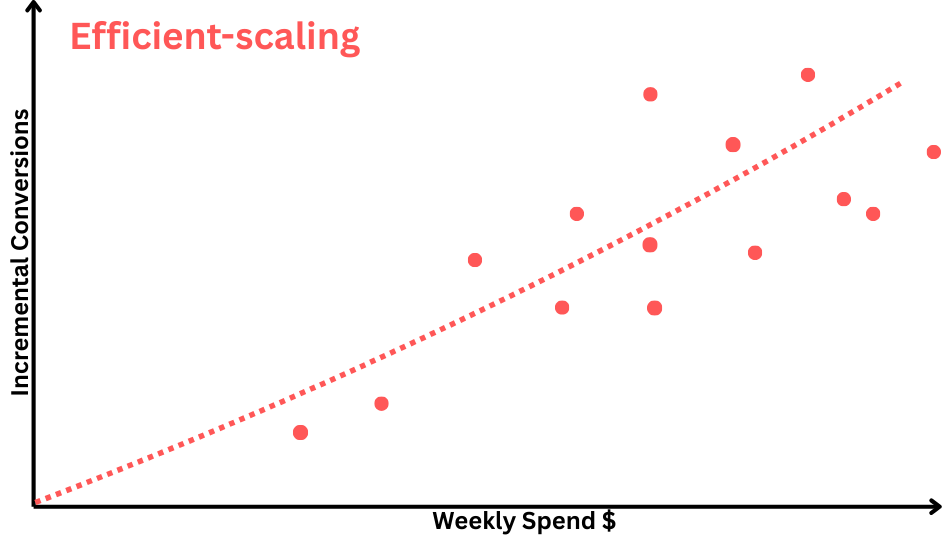
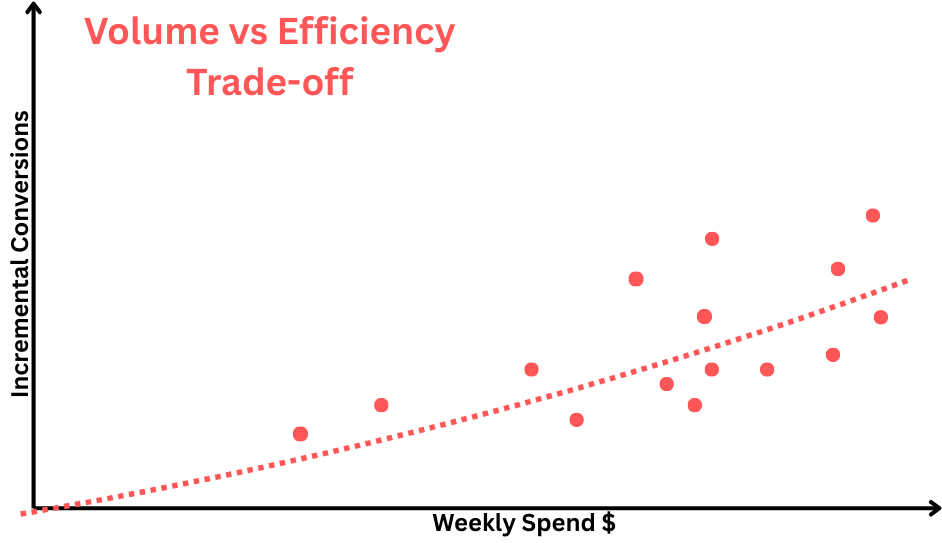
Among the many insights from the ongoing incrementality measurement, one especially useful example was the response curves—showing how efficiency changed with spend, where each channel/tactic sat on the scale-vs-saturation curve, and updating as the team tested new spend levels and audiences.
Under-spent: The curve starts flat then gets steeper as spend increases—conversions accelerate once you hit enough frequency → Scaling up improves efficiency.
Saturation: The curve gradually flattens—each extra dollar adds fewer incremental conversions → Hold/reduce or broaden the audience to regain efficiency.
Efficient scaling: The curve rises steadily with little flattening across the tested spend range → Good candidate to scale further.
Volume vs. efficiency tradeoff: The curve rises, but it's less steep than other channels—higher cost per incremental conversion → Useful for volume, but size intentionally.
Action Taken
- Reallocate budgets using response-curve signals to scale, hold, or pull back
- Optimize high-CPA areas and confirm what worked in subsequent measurement refreshes
- Pilot new channels and tactics with minimal overhead (e.g., reusing creative), then measure and optimize them in the same unified framework
- When saturation kicks in, test new audiences via Maxma-powered geo A/B tests (which also don't rely on cookies/UTMs)
Result
Scaled into 5+ top-of-funnel channels, driving substantial inbound growth at 30%+ lower incremental CPA than their original performance channels in under six months—unlocking a new "brand-performance" growth engine with far more runway to scale than saturated search.
Final Takeaway
Top-of-funnel isn't just awareness—it can be a performance lever. The historical constraint was measurement, not channel potential. Now that measurement can capture incremental impact despite tracking gaps while staying fast and granular, the best teams are building "brand-performance" engines to reach new audiences efficiently as search and other bottom-funnel channels saturate.